

Types of lime kilns and their technical and economic parameters
Lime kilns come in various types, each with distinct technical and economic parameters. Classified by kiln shape, they primarily include shaft kilns, rotary kilns, double-chamber shaft kilns, sleeve kilns, and beam kilns. Shaft kilns have a simple structure and are suitable for small to medium-sized production, but they have a lower thermal efficiency. Rotary kilns excel in large-scale continuous production, feature high automation, achieve thermal efficiencies of 70%-80%, and produce stable product quality.
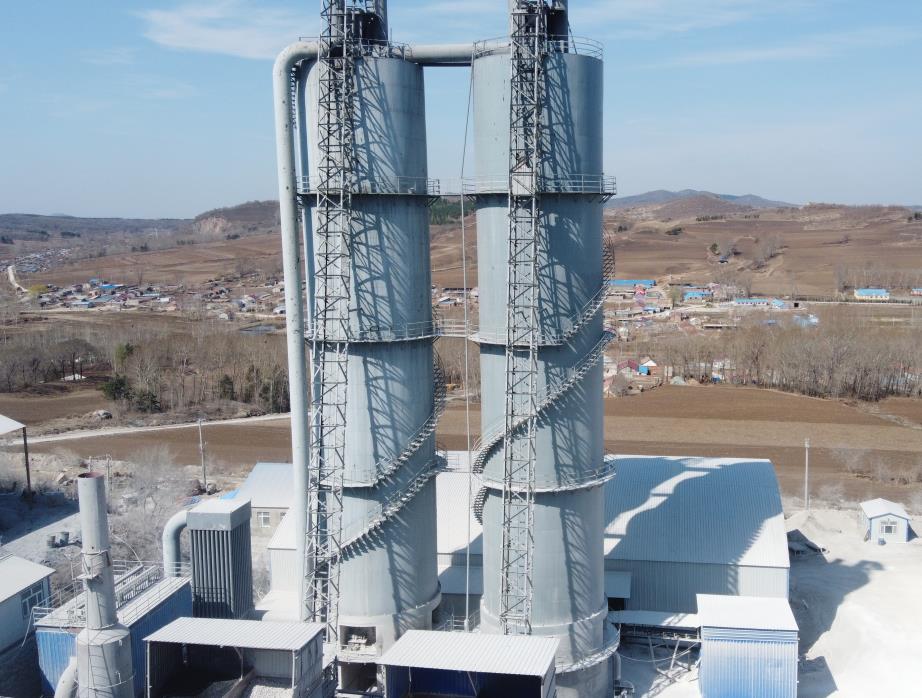
In terms of technical parameters, there are significant differences among various kiln types. Taking production capacity as an example, the rotary kiln has the highest single-kiln capacity, reaching up to 300-1500 tons per day, while the shaft kiln typically ranges from 100-600 tons per day. In terms of thermal efficiency, the double-chamber shaft kiln, leveraging the parallel flow heat storage principle, achieves a thermal efficiency of up to 80%-90%, significantly surpassing traditional shaft kilns. In terms of energy consumption, the gas fuel heat consumption of the sleeve kiln is as low as 900×4.18kJ/kg, and the electricity consumption is approximately 40kWh/t, demonstrating excellent energy-saving effects.
In terms of economy, the investment and operating costs vary among different kiln types. Although rotary kilns have high production efficiency, they are heavy and require a large area, leading to higher investment costs. On the other hand, domestically produced gas-fired shaft kilns have the lowest construction investment among active lime kiln types, making them suitable for enterprises with limited budgets. Furthermore, as environmental protection requirements increase, emission standards for lime kilns are becoming increasingly stringent. Kiln types that adopt advanced dust removal, desulfurization, and denitrification technologies are more favored by the market.
The selection of lime kiln type requires comprehensive consideration of various factors such as production scale, product quality, energy consumption, and environmental protection requirements, in order to achieve a win-win situation for both economic and environmental benefits.


