

Requirements for raw materials in rotary kiln for lime calcination
The rotary kiln calcination process has extremely stringent requirements for the selection of limestone raw materials, which is a key factor determining the final product quality (activity, purity) and kiln stability.
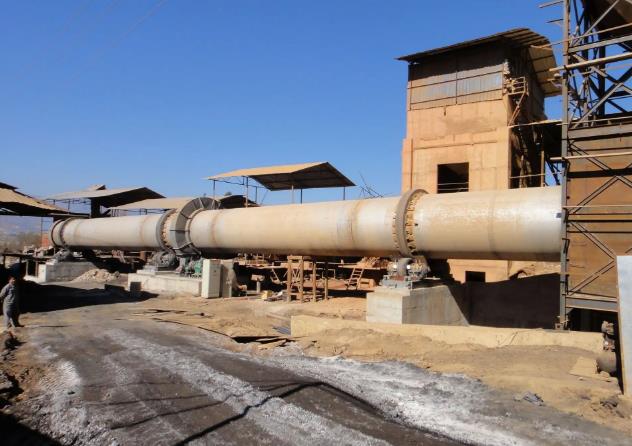
The following is a summary of the core requirements for raw materials in rotary kiln calcination of lime:
1. High purity of chemical components:
The core of raw materials lies in the calcium carbonate (CaCO₃) content. To produce metallurgical lime with high reactivity, the calcium oxide (CaO) content of the limestone entering the kiln should be higher than 54% (i.e., the purity of CaCO₃ should be higher than 96%). At the same time, impurities must be strictly controlled, especially the sulfur (S) content, which should be below 0.015%, as sulfur can directly migrate into the lime and affect the quality of steel making. Additionally, the contents of silicon dioxide (SiO₂) and magnesium oxide (MgO) must also be kept at a low level (e.g., SiO₂ ≤ 1.0%) to avoid reducing the effective fluxing performance of the lime.
2. Reasonable particle size gradation:
Unlike shaft kilns, rotary kilns typically use smaller and uniform particle sizes. Generally speaking, the particle size range of limestone entering the kiln should be controlled between 20mm and 40mm. It is also required that the uniformity of particle size is good, with the proportion of particles smaller than 20mm or larger than 40mm not exceeding 3% of the total. Particles that are too large can easily lead to green burning (incomplete burning of the core), while particles that are too fine may be carried away by airflow inside the kiln or cause overburning. Additionally, excessive powdered material can easily cause ring formation inside the kiln.
3. Physical Characteristics and Cleanliness:
The raw material should be limestone with a dense crystalline structure, which can maintain good strength during the calcination process and is less prone to bursting and pulverization in the preheater. At the same time, the powder content must be strictly controlled before entering the kiln (usually required to be less than 5%), and surface attachments such as sediment must be removed through water washing or screening to ensure smooth ventilation inside the kiln and pure product quality.


