

Key points for temperature control during gold calcination in lime kiln
During the calcination process in a lime kiln, precise temperature control is a crucial factor in ensuring product quality, especially for the calcination of gold-grade lime, where temperature requirements are extremely stringent.
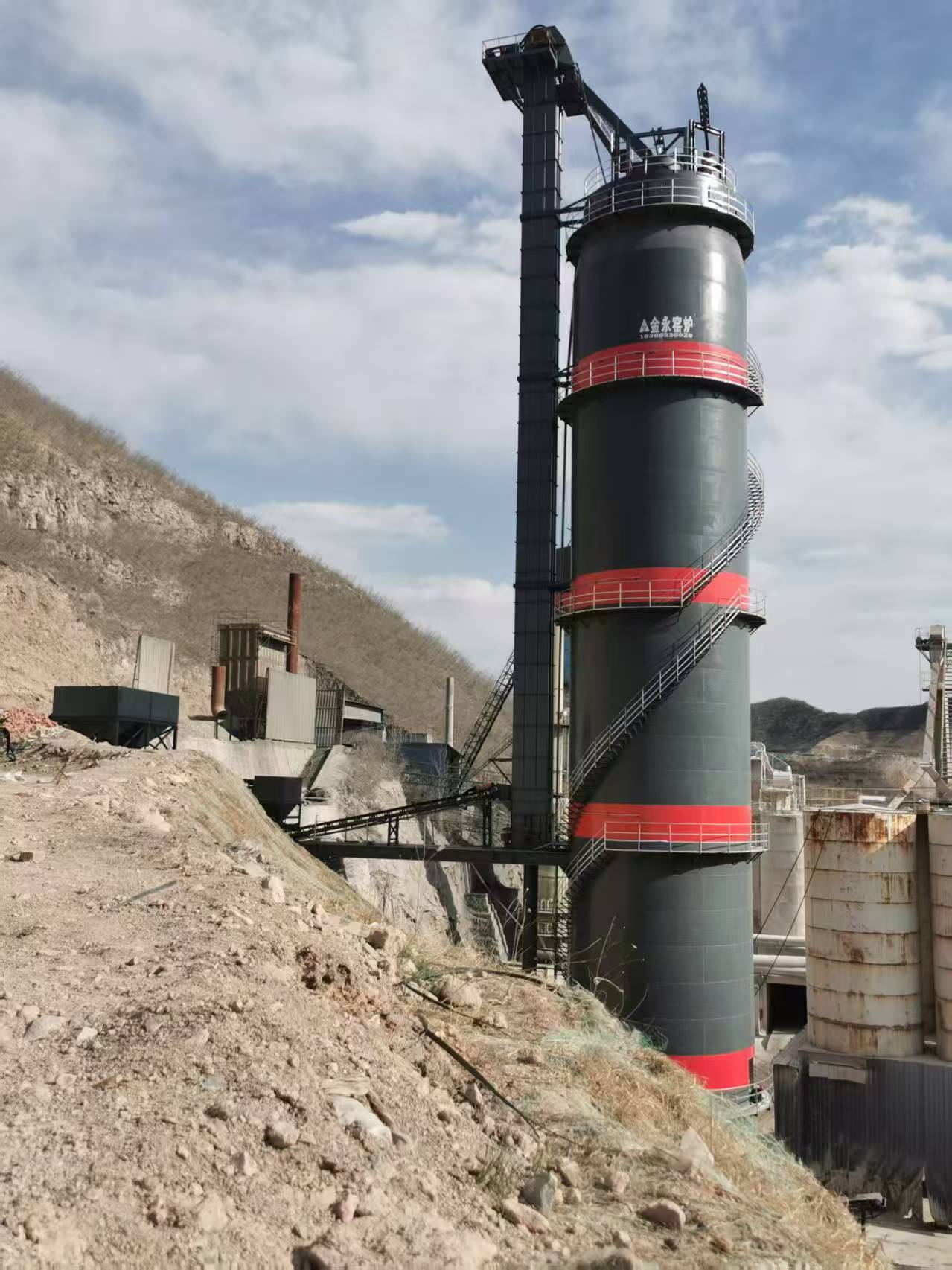
The optimal temperature range for calcination of gold-grade lime is between 1050 and 1150 degrees Celsius. When the calcination temperature is below 1000 degrees Celsius, limestone cannot decompose sufficiently, leading to the phenomenon of "undercooking". This results in reduced lime activity, affecting subsequent usage effectiveness and failing to meet high-end industrial requirements. Conversely, if the temperature exceeds 1200 degrees Celsius, it is prone to "overburning", causing the lime structure to become dense and its activity to deteriorate. This also does not meet the standards for gold-grade lime.
During the calcination process, close attention should be paid to temperature changes, and the operation of "monitoring temperature and adjusting airflow" should be carried out. The temperature fluctuation should not exceed 50 degrees Celsius. When the top temperature exceeds 160 degrees Celsius, it indicates that the temperature inside the kiln is too high. At this time, the airflow should be appropriately reduced to prevent further temperature rise and avoid overburning. Conversely, if the ash discharge temperature is higher than 80 degrees Celsius, it indicates that the heat distribution inside the kiln may be uneven or the calcination intensity is insufficient. It is necessary to increase the airflow to promote the full combustion of fuel and increase the temperature inside the kiln.
When calcining gold-grade lime in a lime kiln, temperature control cannot be taken lightly. Only by strictly adhering to the appropriate temperature range and flexibly adjusting the air volume according to actual conditions, can we produce high-quality and well-activated gold-grade lime that meets the needs of various high-end industrial applications.


