

Lime Kiln Solutions for Southeast Asia: Adapt to Local Limestone and Fuel Conditions
In response to the characteristics of limestone and the current fuel supply situation in the Southeast Asian market, Jinyong Kiln has launched an adaptive lime kiln overall solution, which not only fits the local resource endowment, but also can stably produce high activity lime, avoiding the problems of insufficient production capacity and high energy consumption caused by blindly copying domestic kiln types.
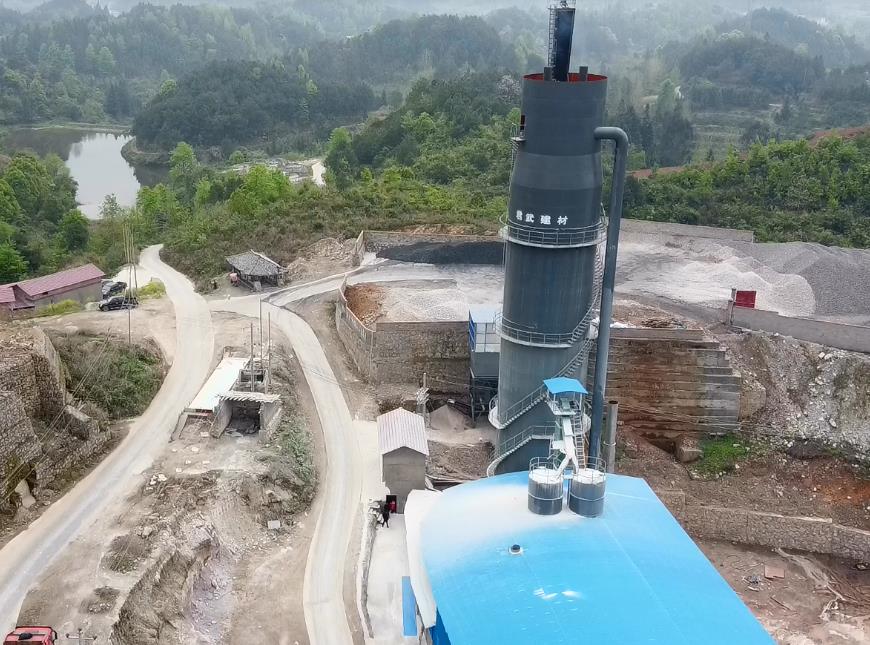
The limestone grade fluctuates greatly in many parts of Southeast Asia, and some mining areas have finer particle size and higher proportion of impurities. The preferred solution is to use a combination of environmentally friendly vertical kilns and energy-saving rotary kilns with vertical preheaters that are more adaptable to raw materials. This can directly process limestone with a particle size of 10-50mm, greatly improving the utilization rate of local mining resources and reducing additional investment in raw material pretreatment.
In response to the dispersed supply of local coal and the high proportion of low calorific value fuels, the plan has optimized the combustion structure inside the kiln, equipped with dedicated burners suitable for low calorific value gas and local low rank coal. While ensuring stable calcination temperature, the heat consumption per kilogram of ash is controlled within the industry-leading range, which not only reduces fuel procurement costs but also adapts to commonly used alternative fuels such as biomass and industrial exhaust, expanding the fuel selection space.
The complete solution is accompanied by full process EPC general contracting services, from on-site investigation, kiln type customization, installation and commissioning to follow-up operation and maintenance in the later stage. It has been verified in the 200 ton lime kiln project in Vietnam, and the output lime activity is stable and meets the local environmental emission requirements. It is very suitable for the lime production needs of industries such as infrastructure, steel, and calcium carbide in Southeast Asia.


