
How much land is needed for the construction of mechanical fossil ash vertical kilns
The mechanical fossil ash vertical kiln adopts an integrated and compact equipment architecture, which greatly improves space utilization compared to traditional lime calcination equipment. The core production area occupies a very small area, and the overall site adaptability is extremely strong, making it very suitable for the construction of small and medium-sized lime production projects. The biggest land advantage of this equipment is that the main body of the production line does not require large-scale site support, effectively reducing project infrastructure and land investment costs.
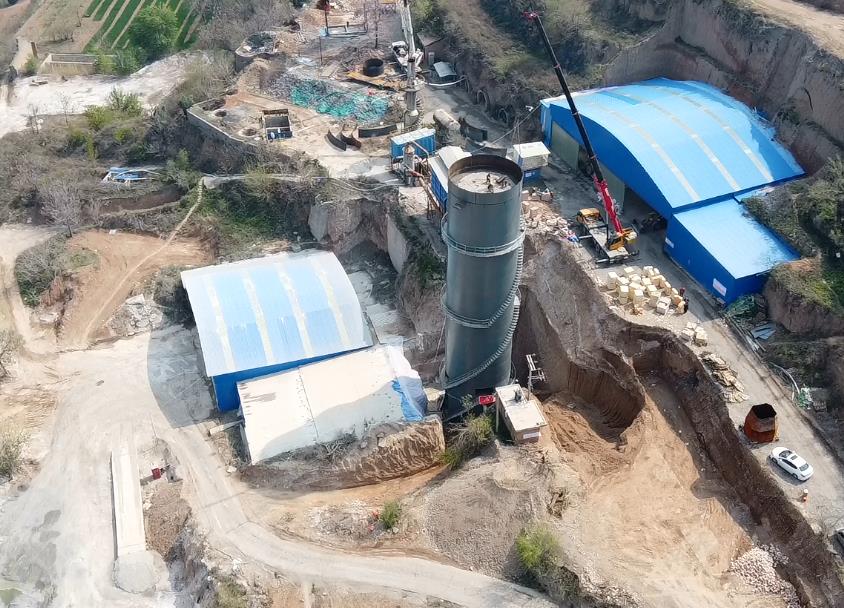
The core production line of the complete set of mechanical fossil ash vertical kiln includes a complete set of production equipment such as kiln body calcination, automatic feeding, intelligent discharge, and tail gas dust removal. The devices are compactly arranged and the processes are seamlessly connected. The overall area is only more than 200 square meters, and the core operation area is highly concentrated. The equipment installation and operation are convenient, and the requirements for site flatness and scale are extremely low.
In addition to the core production line, a complete factory construction also requires supporting auxiliary production sites to ensure continuous and stable production operation. It mainly includes limestone raw material storage area, fuel stacking storage area, and auxiliary areas such as finished product stacking, equipment maintenance, and access roads need to be reserved. Taking into account all production and supporting areas, the overall construction land demand for the complete mechanical fossil ash shaft kiln project is relatively small, with a total land area of only 10-15 acres.
The land planning model has outstanding advantages, with the core production area being extremely efficient in land use. The supporting areas can be flexibly adjusted in layout according to production capacity requirements and site topography, without the need for large-scale land acquisition and construction. Compared to traditional lime kiln projects that occupy tens of acres, this equipment significantly saves land resources, reduces factory construction costs, and has high flexibility in site planning. It is a high-quality selection for energy-saving, land saving, and efficient lime production projects of small and medium-sized enterprises.