

Optimization of process conditions for producing high activity lime in lime shaft kiln
The key to producing high activity lime in a lime kiln lies in the coordinated control of calcination temperature, calcination time, and limestone particle size.
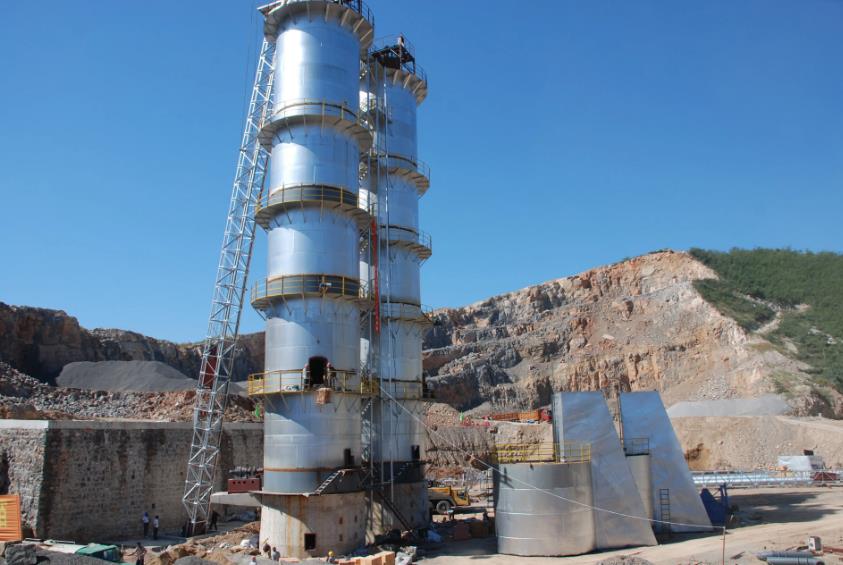
Temperature is the primary factor, and the ideal calcination temperature range for active lime is 1050 ℃ to 1150 ℃. Low temperature, incomplete decomposition of limestone, residual burning; If the temperature is too high, the crystal will sinter, the porosity will decrease, and the activity will decrease. Time control is equally crucial, and the residence time should be controlled at 2-3 hours. If the time is too short, the decomposition will not be sufficient, and if the time is too long, the crystal will grow, the specific surface area will decrease, and the hydration reaction rate will be reduced.
The particle size of raw materials affects heat transfer and decomposition efficiency. It is recommended to control it within 40-80mm, with uniform grading to avoid excessive fine powder blocking the airflow channel and affecting the uniformity of the temperature field. In terms of air volume ratio, it is advisable to maintain an excess air coefficient of 1.1-1.2 to ensure full combustion of the fuel while avoiding excessive airflow carrying away heat and damaging temperature gradients.
In addition, fuel selection affects the uniformity of calcination, and it is recommended to use low sulfur coal or coke to reduce the adverse effects of impurities on lime activity. In operation, the temperature distribution of the cross-section is monitored through thermal imaging, and the fabric and ash removal rhythm are adjusted in a timely manner to maintain the stability of the calcination zone.
By comprehensively optimizing the above parameters, the activity of lime can be increased to over 350mL (4N HCl titration method), meeting the high-end application needs of steelmaking, calcium carbide, and other industries. In actual production, it is necessary to dynamically adjust according to the characteristics of raw materials, while balancing quality and energy consumption, in order to achieve stable production of high activity lime.


