

How to balance production capacity, cost, and environmental protection? Kiln Type Selection Guide
When choosing a lime kiln, balancing production capacity, cost, and environmental protection is the most crucial selection challenge for many lime production projects before they are implemented. Blindly selecting large kiln types based solely on production capacity can easily lead to problems such as insufficient operating rates and soaring unit energy consumption; Blindly lowering costs and choosing low-end equipment will result in hidden costs of later environmental upgrades and frequent shutdowns that far exceed the initial investment; Focusing solely on high standard environmental configurations may significantly prolong the project's investment payback period and lose market competitiveness.
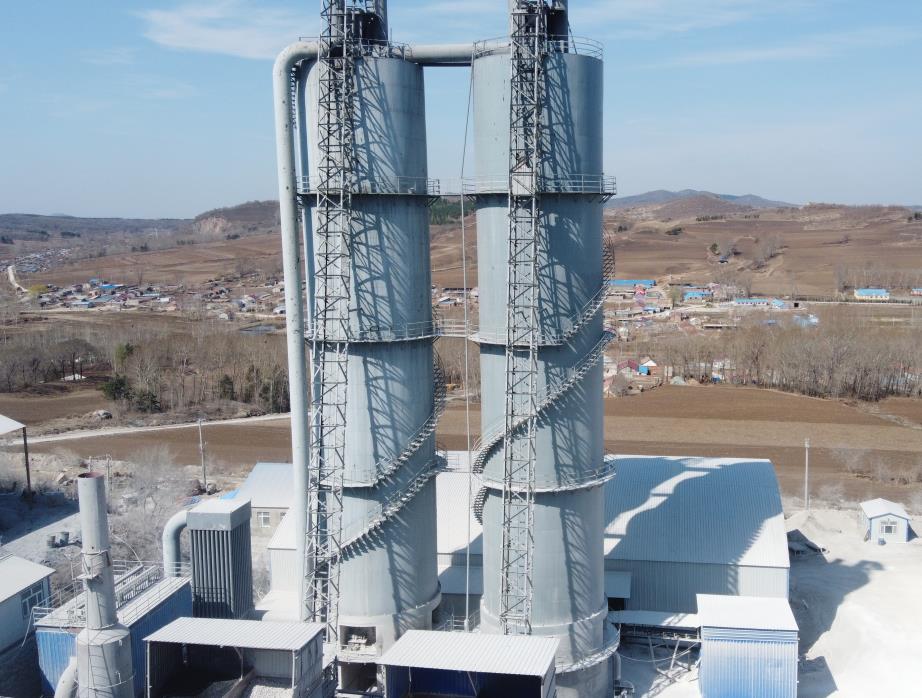
The true balance logic requires first anchoring one's own actual working conditions: confirming the environmental red line for local industry access, using emission indicators such as particulate matter and nitrogen oxides as the basic threshold for selection, to avoid being forced to shut down and rectify due to policy requirements in the future. Combined with a stable annual order volume, we can deduce a reasonable daily production capacity. We should not blindly pursue ultra large kiln types, but prioritize mature kiln types that can adapt to the particle size of raw materials and local fuel characteristics.
From the actual implementation effect, the new environmentally friendly shaft kiln upgraded by automation can achieve a good balance among the three in the medium production capacity range. The full process PLC control can stably control the standard coal consumption within 130kg/t, and with the supporting ultra-low emission dust removal system, the dust emission is stable below 20mg/Nm ³. The construction and operation costs are also much lower than those of double chamber kilns and rotary kilns with the same production capacity. Double chamber kilns are more suitable for medium to large-scale continuous production scenarios, with stronger energy stability for long-term operation, and are suitable for projects with stable large-scale orders.
The core of selection is never to choose the kiln type with the highest parameters, but to choose the kiln type that best matches its own raw material conditions, order scale, and local environmental requirements, in order to achieve long-term stable production with no waste of production capacity, controllable costs, and environmental standards.


