

Mechanical fossil lime kilns have high demand in the Southeast Asian market
In recent years, the industrialization process in Southeast Asia has accelerated comprehensively, and the demand for high-quality lime in industries such as steel, metallurgy, and building materials has continued to rise. Lime is a key auxiliary material for steelmaking slag making, alumina production, and power plant desulfurization, and its stable supply is crucial. In this context, mechanical fossil lime kilns are becoming a purchasing hotspot in the Southeast Asian market due to their advantages of large production capacity, high degree of automation, and stable product quality.
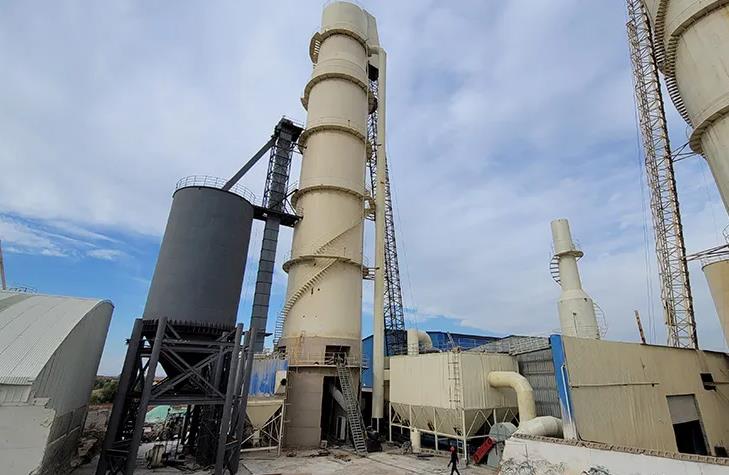
In Indonesia, the nickel ore processing industry has driven a surge in demand for lime. In 2025, the Indonesian Liqin OBI Industrial Park will successfully put into operation a 600000 ton lime production line, including three 600 ton/day mechanical fossil lime kilns. Subsequently, the 1 million ton/year lime production line also entered the construction phase, with the addition of 5 600 ton/day kilns, fully demonstrating the core position of large-scale mechanical fossil lime kilns in resource processing parks.
The Vietnamese market remains equally hot. The Jinyong Kiln, a mechanized lime vertical kiln with a daily output of 200 tons built by DLH Company in Vietnam, has been completed and put into operation, achieving stable product quality through highly automated calcination control technology. Meanwhile, MCC Baosteel continues to provide lime kiln maintenance services for Formosa Plastics Ha Tinh Steel in Vietnam, confirming the long-term operation of lime kilns in the region.
The Laotian market also shows growth potential. In 2026, China Road and Bridge Corporation won the bid for the 300000 ton annual lime kiln project of Wanxiang Conch Cement, which will enhance the local building materials production capacity in Laos. This marks the comprehensive diffusion of lime demand from coastal industrial areas to emerging inland markets.
Mechanical fossil lime kilns are widely favored in Southeast Asia, thanks to their energy-saving and environmental protection advantages. By integrating intelligent control systems and nitrogen suppression technology, pollutant emissions can be solved from the source, which is in line with the increasingly strict environmental policies of various countries. Modular design also significantly shortens the construction cycle and reduces investment risks.
In summary, the strong demand for mechanical fossil lime kilns in Southeast Asia is an inevitable result of the dual drive of regional industrialization and green transformation. For equipment suppliers, providing a complete set of solutions that combine production efficiency, automation level, and environmental performance is essential to seize the opportunity in this blue ocean.


