

Common faults and maintenance methods of veneer peeling machine
As a technician who has been working with veneer rotary veneer machines for a long time, I am well aware of the most common fault points in daily maintenance. Firstly, the uneven thickness of the rotary cutting veneer is often caused by excessive wear and clearance between the feed screw and nut, or radial swinging of the clamping shaft. During maintenance, it is necessary to check and replace worn screws and nuts, and calibrate the coaxiality of the clamping shaft to ensure that the bearing seat is securely fastened without looseness.
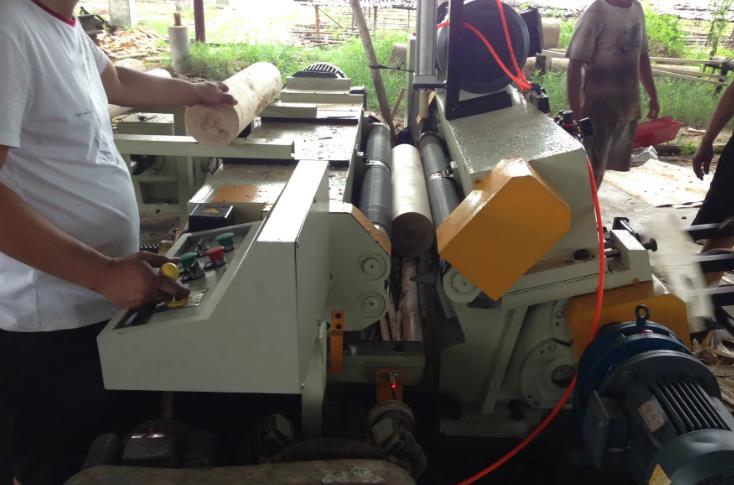
Another typical problem is that the surface of the veneer produced by rotary cutting may become fuzzy or crack. This is often related to improper knife gate pressure, inaccurate cutting angles, or blade passivation. During processing, it is necessary to readjust the relative position and angle between the pressure gauge and the blade based on the material of the wood, and maintain a moderate pressure on the wood with the blade door. At the same time, it is necessary to promptly polish or replace dull blades to maintain a sharp edge.
Be alert to abnormal vibrations and noise during equipment operation. Usually, it is necessary to check whether the main transmission gear is severely worn, whether the belt is too loose or damaged, and whether the bearings in various parts are lacking lubrication or damaged. The countermeasure is to regularly add lubricating grease, tighten or replace the transmission belt, and replace the gears and bearings with severe wear.
Unstable pressure in the hydraulic system can cause jamming or slow movement. This requires checking whether the hydraulic oil is clean and sufficient, whether the filter screen is blocked, and checking the working status of the oil pump, overflow valve, and cylinder seals one by one. Keeping hydraulic oil clean, replacing it on time, and repairing or replacing faulty hydraulic components are key to maintaining system stability.


