
6 reasons for uneven thickness of veneer in rotary cutting machine
Rotary cutting machine is the core equipment in plywood production, and the uniformity of the thickness of the processed veneer directly affects the quality of the finished product and the utilization rate of wood. In actual production, the problem of uneven thickness of veneers is often caused by the following six reasons.
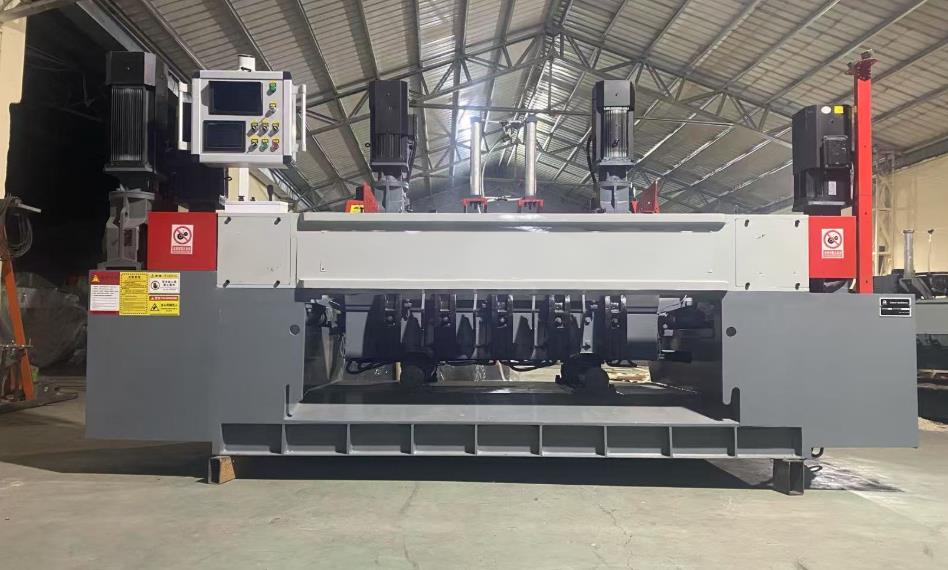
1、 Inaccurate equipment accuracy
The core components of the rotary cutting machine, such as the card shaft, slider, and drive gear, if there is clearance or deformation due to long-term wear or improper maintenance, it will directly cause the wooden section to jump or deviate during the rotation process. This mechanical instability can cause changes in the feed trajectory of the rotary cutting blade, resulting in the cutting of veneer with thickness fluctuations.
2、 Knife door parameter imbalance
The setting of the knife door (i.e. the relative position between the pressure gauge and the blade) is crucial. Inappropriate pressing rate of the pressure gauge, uneven gap between the pressure gauge and the blade, or mismatch between the angle of the blade and the material and temperature of the wood segment, cannot effectively compress and guide the smooth cutting of wood fibers, which can easily cause local thickness or thinness of the veneer.
3、 Poor cutting edge condition
The sharpness of the rotary cutter itself is the foundation for ensuring smooth cutting. When the blade is worn, curled, or has small gaps, the cutting resistance increases, and it is no longer "cutting" but partially "tearing" the wood fibers, resulting in a rough surface and uncontrolled thickness of the veneer. Regular sharpening and maintaining the straightness of the blade edge are basic requirements.
4、 Defects in the condition of wooden sections
The issue with the raw materials themselves cannot be ignored. The irregular shape of wood segments (such as excessive bending), the presence of knots, decay, or uneven stress inside, or inadequate softening treatment (steaming) of wood, as well as large temperature differences between the core and the outside, can cause significant differences in cutting resistance among different parts of the wood, resulting in differences in thickness.
5、 Fluctuations in hydraulic and control systems
Modern rotary cutting machines often use hydraulic drive and numerical control system to control feed. If the hydraulic system pressure is unstable, the oil temperature is too high, or there is internal leakage, or the servo control system responds slowly and the parameter settings are improper, it will be impossible to achieve uniform and accurate feed of the blade, and the thickness will naturally produce periodic or random deviations.
6、 Improper operation and process
The experience and standards of the operators are equally crucial. Inaccurate centering, insufficient clamping force of the clamping shaft, or failure to adjust process parameters such as rotary cutting speed and feed rate in a timely manner for different tree species, diameters, and seasons during the installation of wooden sections can disrupt stable cutting conditions and cause uneven thickness.
Uneven thickness of single boards is a systemic problem that involves multiple aspects such as equipment, cutting tools, raw materials, control, and operation. Only through systematic inspections, precise process adjustments, and standardized operation and maintenance can we fundamentally ensure the uniformity and stability of the veneer thickness, and enhance the quality and value of the final product.