
Research and application of new lime calcination technology
The lime calcination process has long been plagued by high energy consumption, heavy pollution, and significant quality fluctuations. Traditional vertical and rotary kilns rely on fossil fuels, with thermal efficiencies generally below 75%, and severe emissions of nitrogen oxides and dust in the flue gas. In recent years, breakthroughs have been made in integrated systems based on suspension preheating and parallel fluidized bed calcination. Through multi-stage cyclone tubes, reverse heat exchange between limestone raw materials and high-temperature flue gas is achieved, preheating the incoming materials to above 900 degrees Celsius and significantly reducing the thermal load of the kiln body. The low-temperature burner with precise air distribution is used in the fluidized bed to control the calcination temperature within the optimized range of 1050 to 1150 degrees Celsius, avoiding the over burning or raw burning phenomenon caused by local overheating in traditional processes.
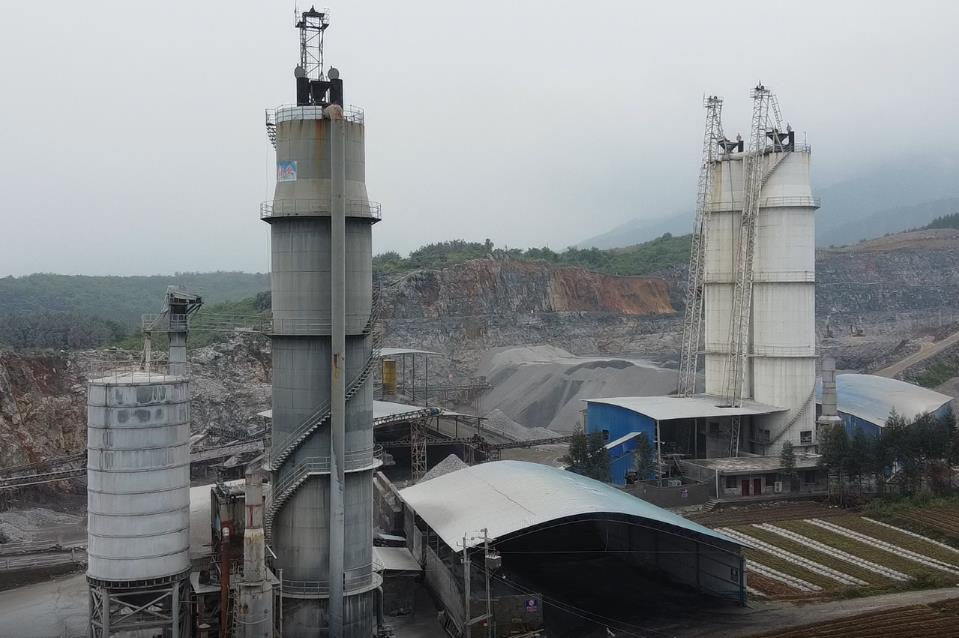
The core of this technology lies in establishing a real-time control model for the kinetics of calcium carbonate decomposition. By using online laser particle size analyzer and flue gas composition monitoring data, the fluidization wind speed and fuel supply rate are dynamically adjusted to achieve uniform heating of limestone particles in a suspended state. Experiments have shown that the system can increase thermal efficiency to over 85%, achieve product activity of over 400ml, and reduce nitrogen oxide emission concentration to below 150 milligrams per cubic meter. The waste heat from calcination tail gas can also drive organic Rankine cycle power generation units, achieving energy cascade utilization.
The promotion of new calcination technology needs to overcome the challenges of high equipment investment and strict operational accuracy requirements, but its advantages in reducing comprehensive production costs and improving environmental benefits are significant. With the continuous optimization of intelligent control algorithms, this technology is expected to reshape the production mode of the lime industry, providing higher quality low-carbon raw materials for industries such as building materials and metallurgy.